Milton has grown fast, and a big share of that growth has been townhouses. They’re practical and well located, but they come with their own heating quirks: end units that are colder than middle units, bedrooms over garages, and small attics that are easy to overlook. If your Milton townhouse feels drafty in winter or your furnace runs longer than you’d expect for the size, this guide is for you.
Middle Unit vs End Unit
A middle-unit townhouse shares walls with neighbours on both sides, so it loses heat mainly through the roof, the front and back walls, and the windows. An end unit has a full exterior wall on one side as well, so it loses noticeably more heat. If you’re in an end unit and your neighbour seems comfortable at a lower temperature, that’s probably why.
In both cases, the roof is the largest heat-loss surface, and the attic is the first place to look.
1. Check Your Townhouse Attic
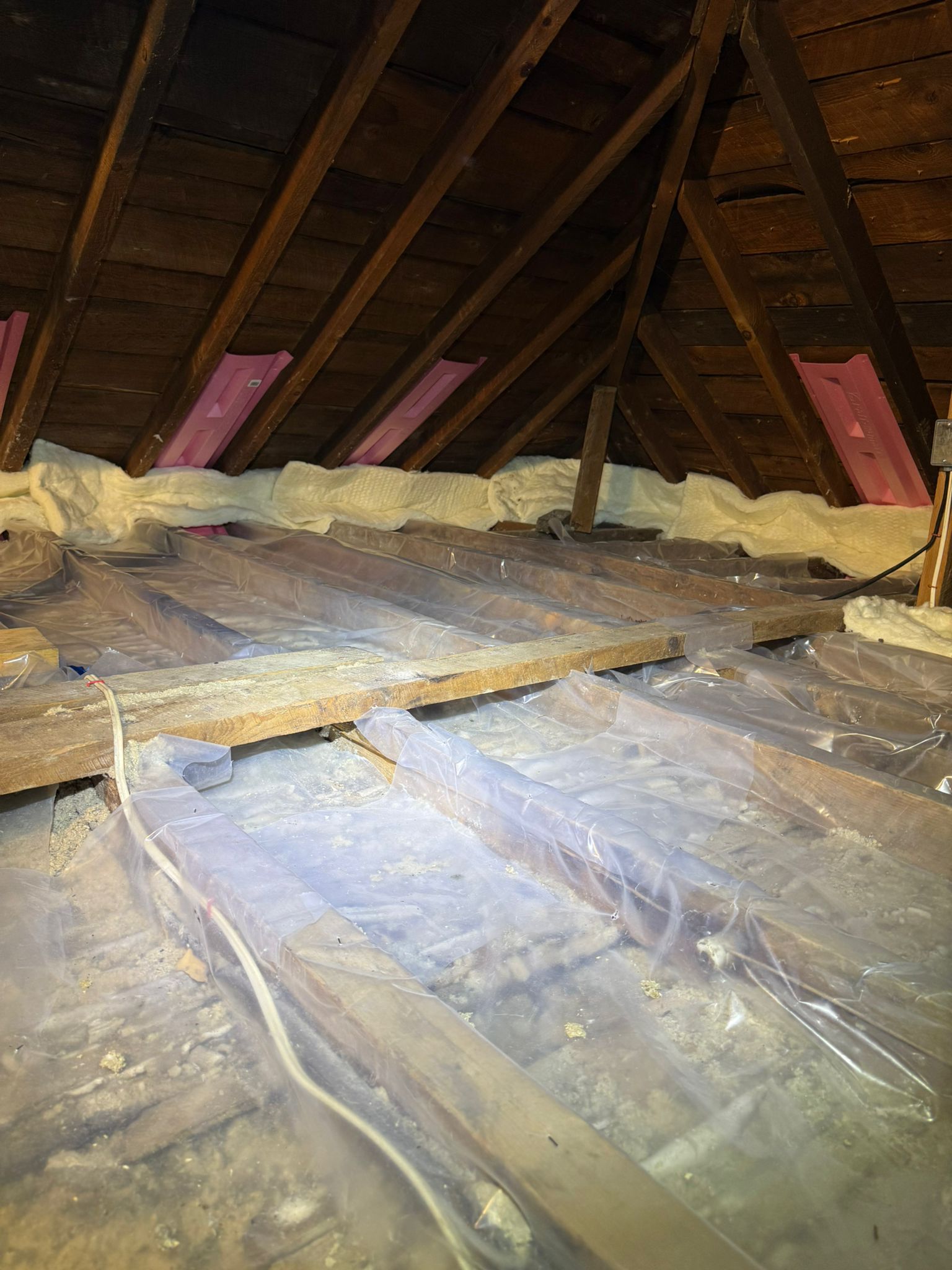
Townhouse attics are often small, with a hatch in a closet or upstairs hallway. Firewalls may separate your attic from your neighbours’. Because they’re rarely opened, it’s easy to miss that the insulation has settled or is thin near the eaves.
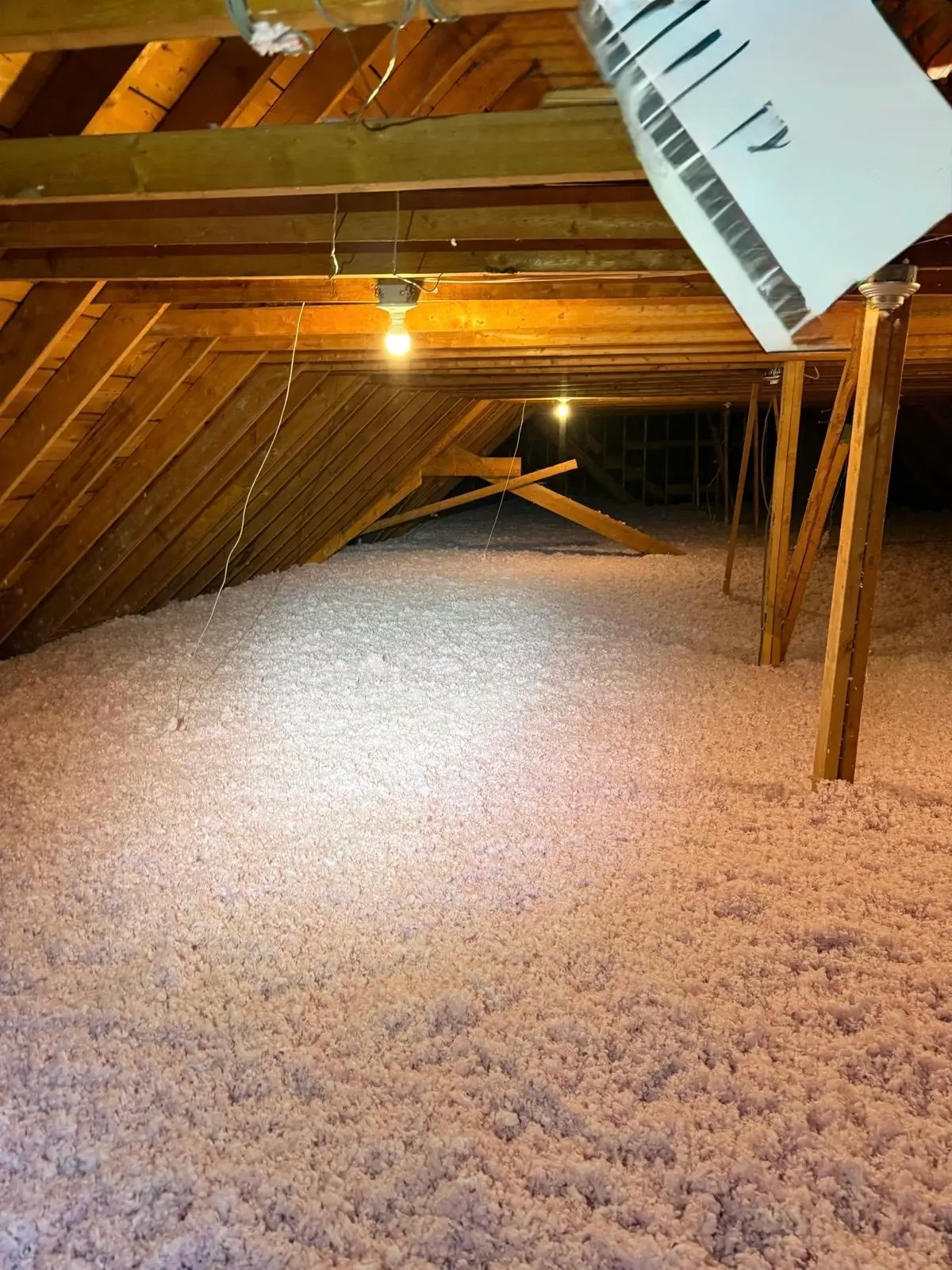
Attic insulation in Milton tops up these spaces efficiently. Ontario’s attic rebate program targets R-50: about 13 to 15 inches of blown-in cellulose or 17 to 19 inches of blown-in fibreglass. Baffle installation keeps soffit vents open, which matters in shallow attics where insulation can easily block the eaves.
2. Fix the Bedroom Over the Garage
Many Milton townhouses have a bedroom or office directly over the garage. The floor of that room is the garage ceiling, and if it’s under-insulated or leaky, the room will be cold no matter what the thermostat says. Garage ceiling insulation, often with 2 lb closed-cell spray foam, fixes it at the source.
3. Seal the Gaps
Townhouses have plenty of small leaks: around the attic hatch, pot lights, bathroom fans and where walls meet the shared firewalls. AeroBarrier air sealing seals them throughout the unit, and weatherstripping the hatch is a quick DIY start.
4. End-Unit Extras
- Use heavier curtains on windows along the exposed side wall.
- Check outlets on that wall for drafts and add foam gaskets.
- If the exposed wall feels cold to the touch, ask about drill and fill insulation.
5. Simple Furnace Habits
- Check the filter monthly in winter.
- Keep registers and returns clear of furniture.
- Use thermostat setbacks instead of big swings; there’s a rebate on eligible smart thermostats.
- Keep snow away from the furnace vent on the side or back of the unit.
Do Milton Townhouses Qualify for the Attic Rebate?
Row townhouses can. The Home Renovation Savings attic rebate offers up to $1,250 to bring an attic from R-12 or less up to R-50, with no energy assessment. Stacked townhouses are not eligible, and homes occupied for six months or less don’t qualify. You must own the home, gas-heated homes must be Enbridge Gas customers, and the work must be done by a participating contractor. The program is extended to November 30, 2026. See our Milton rebate page.
Frequently Asked Questions
Why is my end-unit townhouse colder than my neighbour’s?
An end unit has an extra exterior wall, so it loses more heat than a middle unit with neighbours on both sides.
Can a small townhouse attic be insulated?
Yes. Blown-in insulation is well suited to small, tight attics.
Do I need my neighbour’s permission?
Work in your own attic doesn’t usually involve your neighbour, but check any condo or freehold association rules that apply to your unit.
Warm Up Your Milton Townhouse
Pro Insulation Contracting will check your attic and garage ceiling and tell you what will make a difference. Request a free estimate or call (416) 315-0471.