Milton grew faster than almost anywhere in Canada for two decades, which means most Milton homes are genuinely new — built in the 2000s, 2010s, even the 2020s. So homeowners here are often blindsided by the same problem: a house that’s barely ten or fifteen years old, and the upstairs is already cold in winter and hot in summer, with a gas bill to match.
“But it’s a new house” is the most common thing we hear. Here’s the uncomfortable truth: a new home isn’t an efficient home. It’s a home built to the minimum standard of its year — and that minimum, plus a decade of settling, is usually why your newer Milton house is already underperforming.
Here’s what’s going on up there.
“New” doesn’t mean “well-insulated” — here’s why
Two things are working against your newer home, and together they explain most of it:
Builders insulate to the code minimum. This isn’t a scandal — it’s the business. A builder meets the code requirement of the build year, and rarely exceeds it, because insulation is a cost and the minimum is what’s required to pass. So your home started at the floor of what was allowed when it was built, not a generous amount.
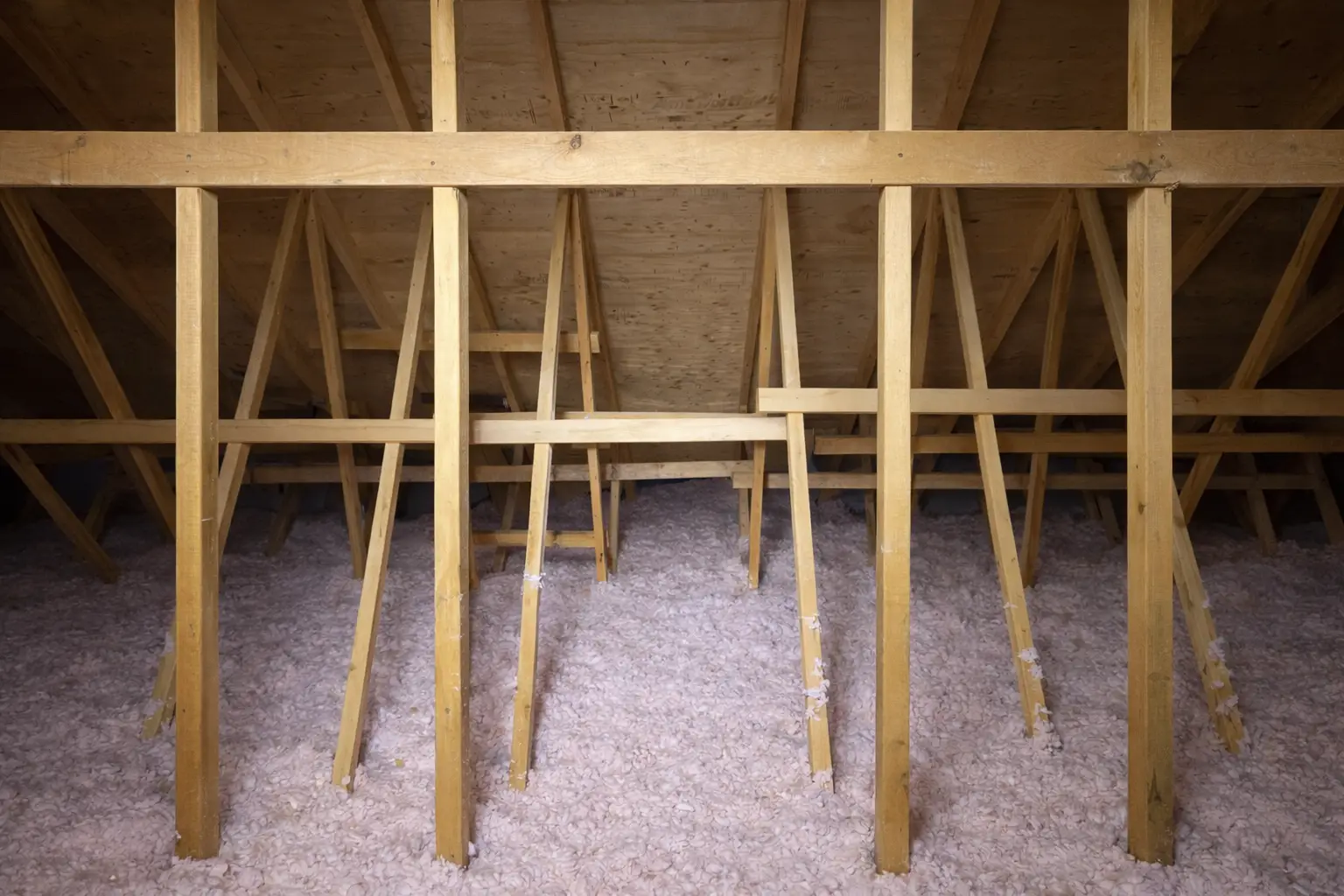
Loose-fill insulation settles. Whatever was blown into your attic on build day has been compressing under its own weight ever since. A home that started at, say, R-50 a dozen years ago measures noticeably less today. The number you’d read with a ruler now is lower than the spec on the original paperwork — sometimes well below the current R-50 rebate threshold.
Put those together and a 10–15 year old Milton home can easily sit below where it should be. It’s not that your house is bad — it’s that “new” was never the same as “efficient,” and time has only widened the gap.
The production-build shortcuts that show up later
Milton’s subdivisions went up fast, in volume, on tight schedules. Speed is efficient for building a whole neighbourhood — it’s less kind to the small attic details that matter for comfort:
- Air sealing skipped or rushed — the ceiling penetrations (wiring, plumbing stacks, top plates, exhaust fans, pot lights) often weren’t carefully sealed
- Baffles missing or crushed — so insulation blocks the soffit vents
- The attic hatch left bare — an uninsulated panel, a hole in your ceiling
- Insulation thin at the eaves — the perimeter, hardest to reach, gets shorted
- Attic ductwork uninsulated or leaky — common in two-storeys where ducts run through the attic to reach the second floor
None of these are visible from inside your home. All of them cost you every winter.
Measure what you’ve actually got — five minutes
Don’t assume from the age of the house. Measure.
- Open the attic hatch, shine a light, step only on joists
- Push a ruler to the drywall at several spots, including near the eaves
- Convert:
| Material | R per inch | 8 in | 12 in | 16 in |
|---|---|---|---|---|
| Blown cellulose | ~3.4 – 3.8 | ~R-28 | ~R-42 | ~R-56 |
| Blown fibreglass | ~2.7 – 3.0 | ~R-22 | ~R-34 | ~R-45 |
| Settled batts | ~2.5 – 3.2 | ~R-22 | — | — |
Target: R-50 minimum to qualify for the rebate, R-60 as the goal. A lot of Milton homeowners are surprised to measure in the R-30s or low R-40s in a house they thought was “new enough.”
Note on Milton’s homes: many have complex rooflines — multiple gables, bonus rooms over garages, bump-outs — which split the attic into several separate sections. It’s common for one section (often over a bonus room) to be shorted while the rest is fine. Measure at more than one hatch if you can.
What a newer home actually needs
The fix isn’t glamorous, but it’s high-return on a newer home because you’re topping up a decent base rather than starting from scratch:
1. Air seal the ceiling first
The step most likely skipped at build. Sealing the penetrations stops warm air (and moisture) leaking into the attic. Seal first, insulate second — otherwise you bury the leaks. [Vapour barrier & air sealing is part of this.]
2. Baffles and ventilation
Restore the soffit airflow so the attic breathes and the roof deck stays cold and even. Baffle installation →
3. Insulate and seal the hatch
Box it, insulate it, weatherstrip it. Small job, real difference.
4. Handle the attic ductwork
If ducts run through your attic, sealing and insulating them stops you heating the attic instead of your upstairs rooms. Blanket wrap insulation →
5. Top up to depth, to the eaves, in every section
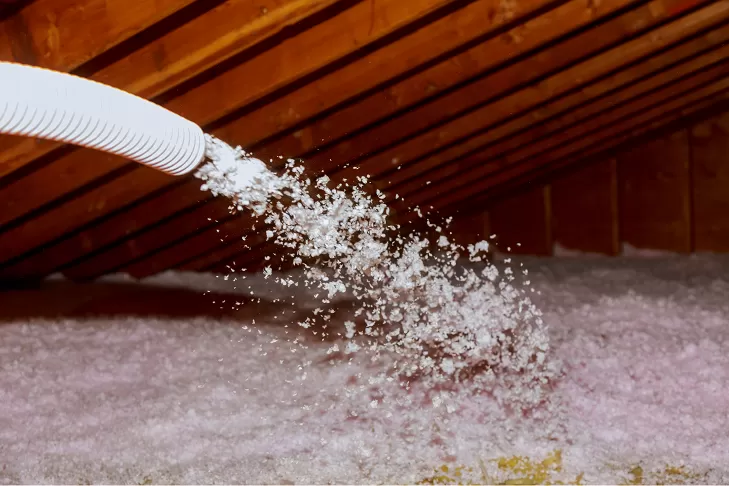
R-50 minimum, R-60 target — reaching the perimeter and covering every attic section.
Cellulose blown-in → · Fibreglass blown-in → · Insulation removal → (only needed if contaminated)
The cold room over the garage — not an attic problem
Very common in Milton’s newer homes: a bedroom or bonus room over the garage that’s always cold. Its floor sits over an unheated garage, not the attic, so more attic insulation won’t fix it. It needs the garage ceiling done. Garage ceiling insulation →
If you’re in older Milton or out toward the escarpment
Not all of Milton is new. The older village core and the rural/escarpment properties toward Campbellville and the Niagara Escarpment are a different story — older homes that often started with far less insulation and are leakier. Those need the same steps but usually with more attention to air sealing, possible vermiculite (older attics — don’t disturb loose greyish granules, have them tested), and sometimes wall insulation via drill and fill. The gain on an older escarpment home is often even bigger than on a newer subdivision one.
Frequently asked questions
My house is only about 12 years old. Can the attic really be underperforming? Yes — it was built to the minimum of its year and has settled since. “New” was never “efficient.” Measure the depth rather than assuming.
Isn’t new insulation supposed to last forever? The material lasts, but loose-fill settles and compresses, losing depth (and R-value) over time. Topping up restores it.
Why is one room or wing always colder? Newer homes have complex attics split into sections. The cold room usually sits under a shorted section, or over an uninsulated duct run.
Do I need to remove the old insulation? Only if it’s contaminated by mould, water, or rodents. Otherwise new goes over old and R-values add.
Do I have to leave home during the work? No.
How long does it take? A straightforward top-up is usually a single day.
Find out what your “new” home actually has — free assessment
If your newer Milton home is already cold upstairs or costing too much to heat, the attic is the first place to look — and it’s usually a high-return fix because you’re improving a decent base. A proper assessment measures each section, checks the ductwork and ventilation, and tells you exactly what it needs.
Pro Insulation Contracting has insulated Ontario homes for over 10 years and serves Milton and the surrounding area. Free on-site assessment, written scope, fixed price before any work starts.
📞 (416) 315-0471 · Book a free attic assessment →